
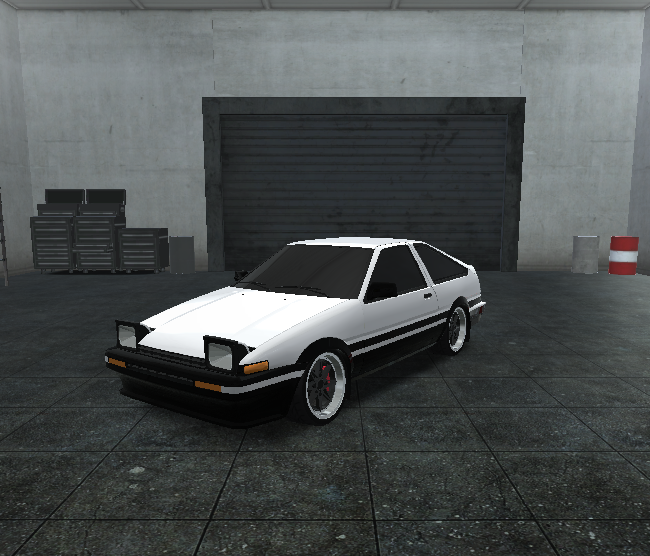

A Guide to Drift Hunters
drift hunters provides a surprisingly deep and rewarding drifting experience in a simple, accessible... View more
Organizer:
- Organized by
-
-

Learn More About JJSploit Fly Scripts and the Basics of Roblox Movement
-
Learn More About JJSploit Fly Scripts and the Basics of Roblox Movement
Learn More About JJSploit Fly Scripts and the Basics of Roblox Movement
Roblox offers a wide variety of interactive experiences, from competitive challenges to open-world adventures and creative simulations. Movement plays an important role in these environments because it determines how players explore maps, avoid obstacles, and interact with their surroundings. Among the scripting topics discussed by Roblox communities, flight mechanics attract attention because they introduce a different approach to character navigation.
The keyword jjsploit fly script is often associated with third-party scripting tools and attempts to change how a Roblox character moves. Understanding this topic involves more than knowing what a flight feature looks like. It also requires some awareness of programming concepts, software compatibility, security considerations, and the difference between developing a mechanic and modifying an experience without permission.
For anyone who wants to learn more, exploring the principles behind flight systems can provide a useful introduction to game programming and responsible experimentation.
Exploring the Idea Behind Flight Scripts
A flight script is generally intended to make a character move through the air rather than follow the usual movement pattern of walking and jumping.
In a conventional game, movement is influenced by gravity, collisions, character controls, and the environment. A flight mechanic changes some of these behaviors to allow greater freedom of movement.
Depending on the design, a flying character might travel vertically, move across open spaces, or change direction while remaining airborne. These actions require the game to interpret player input and translate it into movement.
Although the result may appear straightforward, the underlying system can involve several connected programming concepts.
How Character Movement Works
Character movement is an important part of interactive software. Every time a player presses a movement key, the game must interpret that input and determine how the character should respond.
In a three-dimensional environment, movement involves multiple directions. A character can travel forward, backward, left, right, upward, and downward.
The game must also account for the character’s current position and orientation. Depending on the movement system, it may need to consider collisions, gravity, speed, and other physical properties.
Understanding these elements helps explain why changing movement behavior can be more complicated than adjusting a single setting.
The Role of Directional Controls
Controls provide the connection between the player and the movement system.
A typical control arrangement allows the player to move in several directions. A flight mechanic may also include separate controls for ascending and descending.
Well-designed controls should be consistent and easy to understand. When movement responds unpredictably, players may struggle to navigate the environment.
Developers can improve the experience by testing different control arrangements and checking how they behave when multiple inputs are used together.
These ideas are useful for many game features, including vehicles, character abilities, and custom navigation systems.
Understanding Camera-Based Navigation
The camera is another important component of three-dimensional movement.
In some movement systems, the direction of travel depends on the camera’s orientation. This means the character can move relative to the direction the player is looking.
For example, looking toward a distant location and moving forward can create a more intuitive navigation experience than relying exclusively on fixed world directions.
However, camera-based movement requires accurate direction calculations. Developers need to understand how orientation relates to movement vectors and how those vectors affect the character’s position.
Learning these concepts can help explain how many modern games create responsive controls.
Why Movement Speed Matters
Speed has a direct effect on the player’s experience.
If movement is too slow, traveling across a large environment may become tedious. If movement is too fast, it can become difficult to control direction or react to obstacles.
A balanced movement system considers the size of the environment, the purpose of the mechanic, and the amount of control expected from the player.
Developers should also consider acceleration and deceleration. A character that starts and stops instantly may feel different from one that gradually changes speed.
Experimenting with these properties in a personal development project can help demonstrate how small adjustments influence gameplay.
Flight and Character States
Games often use character states to determine which movement rules should apply.
For example, walking, jumping, falling, and swimming can each require different behavior. A custom flight mechanic introduces another possible state.
The system needs to recognize when the character enters that state and when it should return to normal movement.
Transitions should be handled carefully. If a movement feature does not stop correctly, it may interfere with other character behaviors.
State management is therefore an important programming concept for developers who want to create reliable and understandable movement systems.
Compatibility Across Different Environments
People researching third-party scripts may notice that compatibility is not always consistent.
Roblox experiences can have different character systems, movement rules, and technical requirements. Platform updates can also change how external tools behave.
As a result, a script designed for one environment may not function as expected in another. Older scripts can also become outdated when the surrounding software changes.
Claims that a tool works universally should be treated cautiously. Compatibility depends on several factors, and there is no guarantee that a particular script will remain functional over time.
Security Considerations for Third-Party Tools
Security is an essential part of researching external applications.
Files from unknown websites may contain harmful or unwanted content, even when their descriptions appear convincing. Users should examine download sources carefully and avoid running files they do not understand.
Be especially cautious if an application requests unnecessary permissions, asks you to disable security protections, or directs you to install unrelated software.
Never share Roblox passwords, authentication codes, or account recovery details with unfamiliar services.
These precautions help reduce unnecessary risks while exploring technical subjects online.
Understanding Platform Rules
Not every modification that is technically possible is permitted within an online game.
Roblox and individual experiences may restrict third-party tools that interfere with gameplay or provide unauthorized advantages. Using such tools can create account-related risks and may affect other players.
Before experimenting with external software, understand the applicable rules and consider whether the activity is permitted.
Developing your own mechanic inside a project you control is a more appropriate way to explore movement programming without interfering with someone else’s experience.
Learn More With Roblox Studio
Roblox Studio provides a practical environment for learning how interactive mechanics are built.
Rather than depending entirely on an existing script, beginners can create a small test project and study the components of a movement system separately.
Start by learning basic variables, functions, events, and player input. Then explore coordinate systems, vectors, camera direction, and character states.
Working through these subjects gradually makes complex behavior easier to understand.
It also allows developers to identify errors, test improvements, and see how each part contributes to the final result.
A Practical Approach to Troubleshooting
When a custom movement system behaves incorrectly, begin by identifying the exact problem.
If the character does not respond to controls, examine input handling. If movement occurs in an unexpected direction, review the direction calculations. If the character behaves inconsistently, investigate speed settings and interactions with other movement states.
Avoid changing several unrelated parts at once. Test one adjustment, observe the result, and record what you discover.
This method makes troubleshooting more organized and helps develop problem-solving skills that apply to many programming tasks.
Building Knowledge Through Practice
Learning programming takes time, and practical experimentation can make abstract ideas easier to understand.
A small movement project provides opportunities to study cause and effect. Changing one property can demonstrate how speed, direction, or character behavior influences the experience.
As your understanding improves, you can move on to more advanced features, such as custom animations, camera controls, environmental interactions, and original character abilities.
Each new project builds on knowledge gained from earlier experiments.
Final Thoughts
The subject of jjsploit fly script introduces several interesting topics related to Roblox movement, including directional controls, camera orientation, character states, speed, compatibility, and software security.
Anyone who wants to learn more should focus on understanding the programming concepts behind flight mechanics and exploring them through appropriate development projects.
Roblox Studio offers a useful starting point for learning how movement systems are designed, tested, and improved. At the same time, careful software research, account protection, and respect for platform rules remain important when evaluating third-party tools.
Developing a clear understanding of these principles can turn simple curiosity about flight into broader knowledge of interactive programming and game design.
Make the article more practically usefulReduce repeated general explanations